
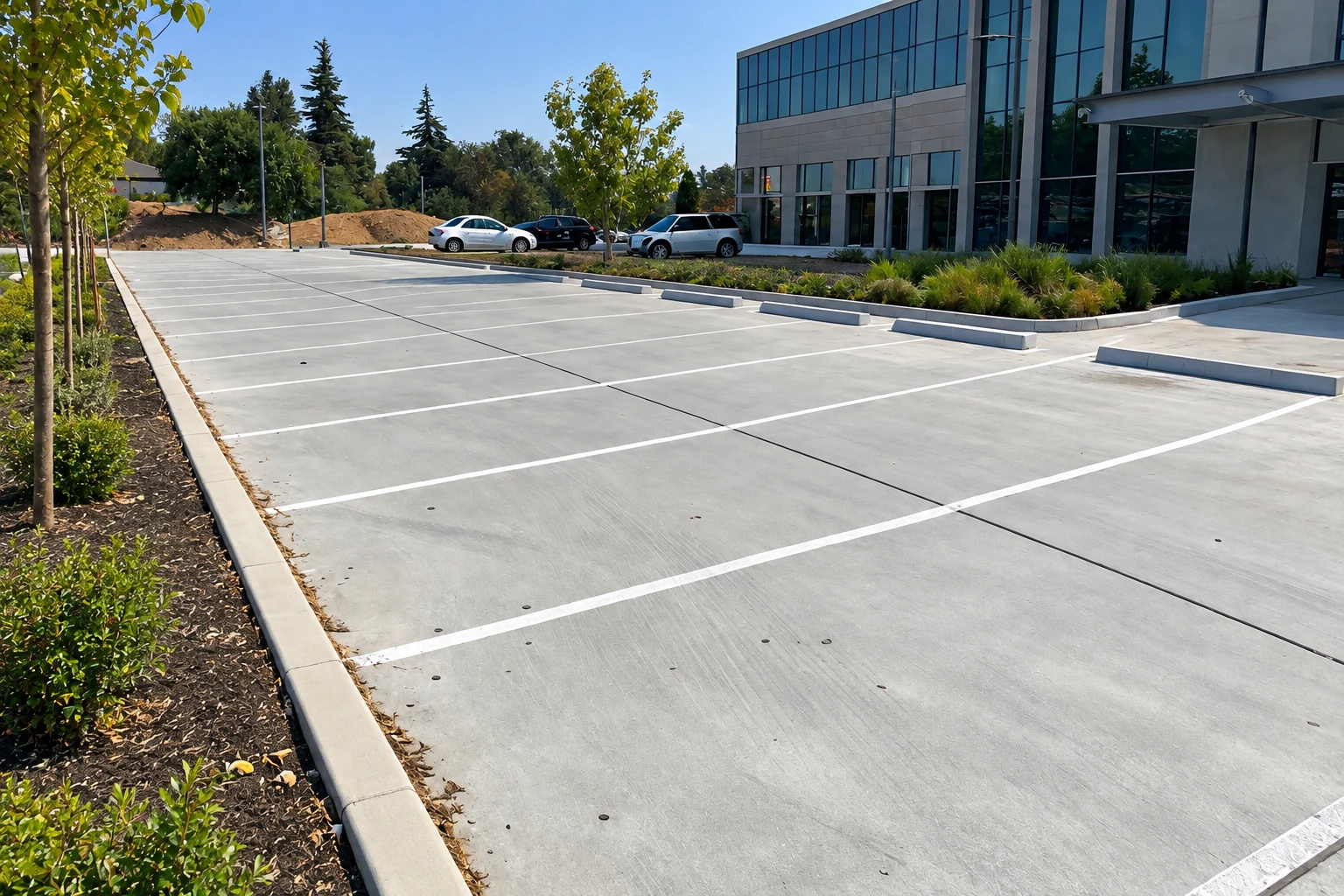
Rockledge is just up the road from us in Palm Bay, and most calls there are homeowner work. We see driveways cracked and sinking at the street end, patios out back that hold water after a storm, and walks that have heaved and gone uneven. The city has older homes in the historic Rockledge Drive district alongside newer neighborhoods, and the older concrete usually shows its age the same way, in settled slabs and joints that have opened up. We do the same work in Viera East and as far south as the West Vero Corridor, so our crew knows what Brevard ground does under a slab.
Water shapes most jobs here. Most flooding in Rockledge comes from rain ponding during tropical storms and hurricanes, so a slab that sits low or tips toward the house will hold that water right against it, and that's why we look at where the water runs before we talk about finish.
What moves the price and the schedule
Size and use come first, since a driveway that carries cars needs more slab and steel than a patio does. After that, the price moves with how much old concrete we break out and haul off, how much base work your ground needs, how far we have to wheel concrete to reach the spot, and the finish you pick. Stamped and decorative work takes more labor than a broom finish, the plain swept texture that gives tires and bare feet some grip. If only part of your driveway is failing, we can replace just those sections. The schedule turns on the permit, the weather and curing, the wait while fresh concrete gains strength. Your own figure comes from the estimate.
Getting storm water off your slab
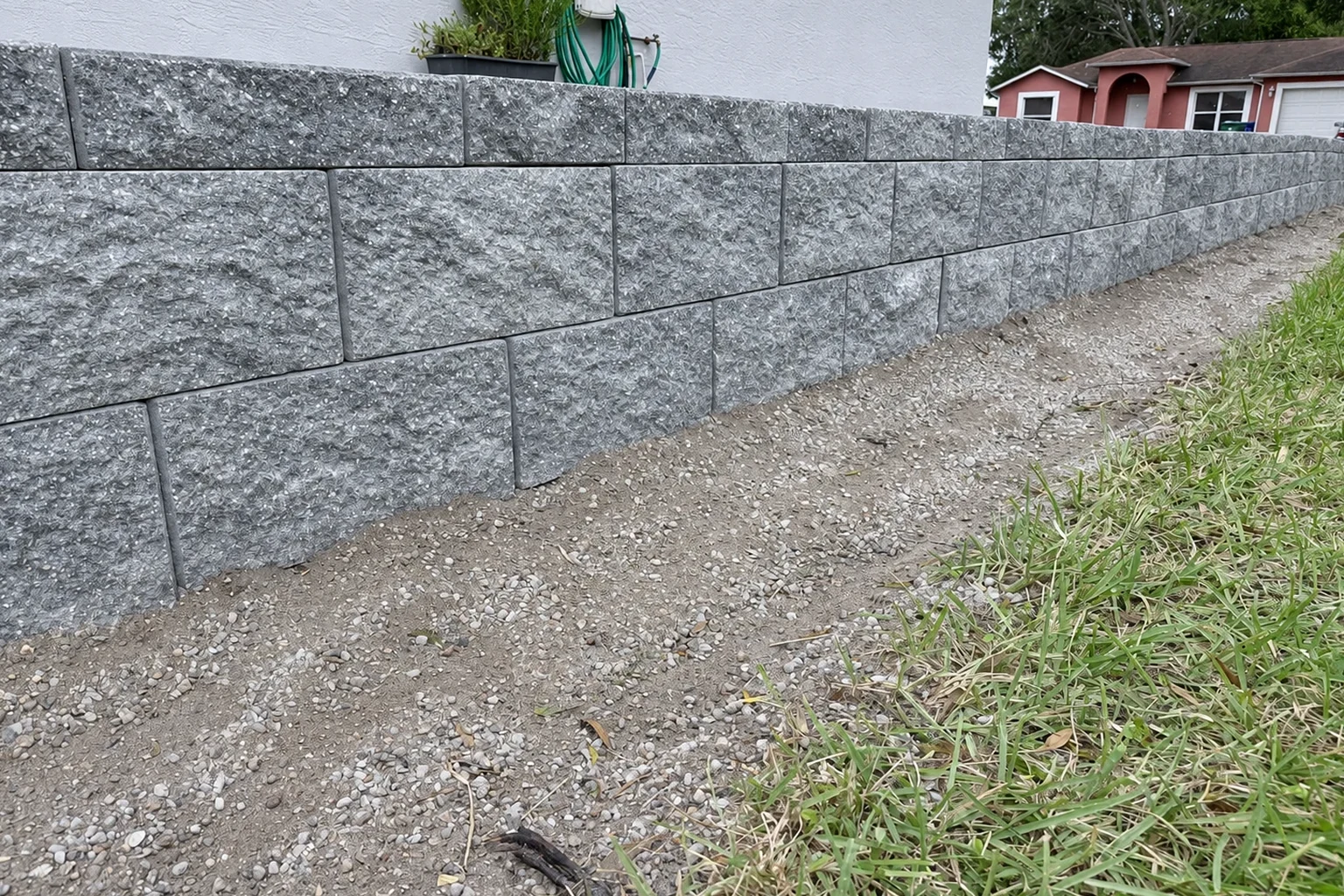
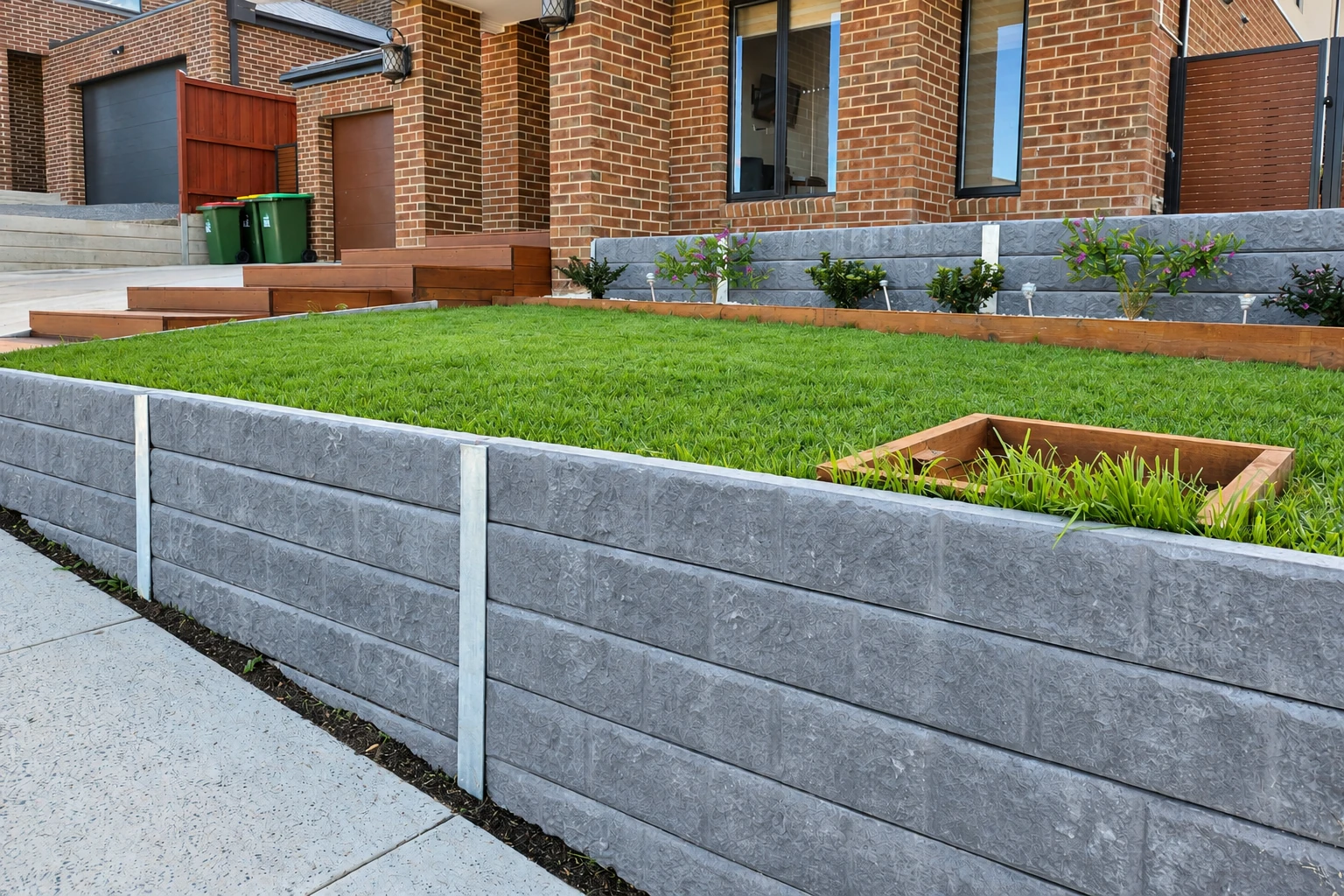
Before we set a form, we check where the rain runs off your roof and yard, because a slab that falls toward the house sends storm water at your foundation. We set the slope so water heads to the lawn or the street instead. Under it, we dig out soft ground and pack the subgrade, the dirt and base the slab sits on, so it doesn't settle after the next soaking. If your yard steps down and the ground needs holding back, a concrete retaining wall can keep it in place first. The base is the part you never see once we pour, and it's the last thing we'd cut from a budget.
What the city asks for this work
Inside city limits, the Rockledge Building Division issues permits for any and all work except minor repairs, and the city's FAQ names driveways on its list, along with patios larger than 100 square feet. An owner or contractor who starts before the permit is issued could face a penalty equal to the full usual permit fee, so the permit comes before the pour. When the city registers a contractor for its permit system, it asks for proof of general liability, workers' comp or an exemption, a State of Florida contractor's license and a Brevard County competency card. Those are fair things to ask anyone you're thinking of hiring. What your job needs depends on the work and where it is.